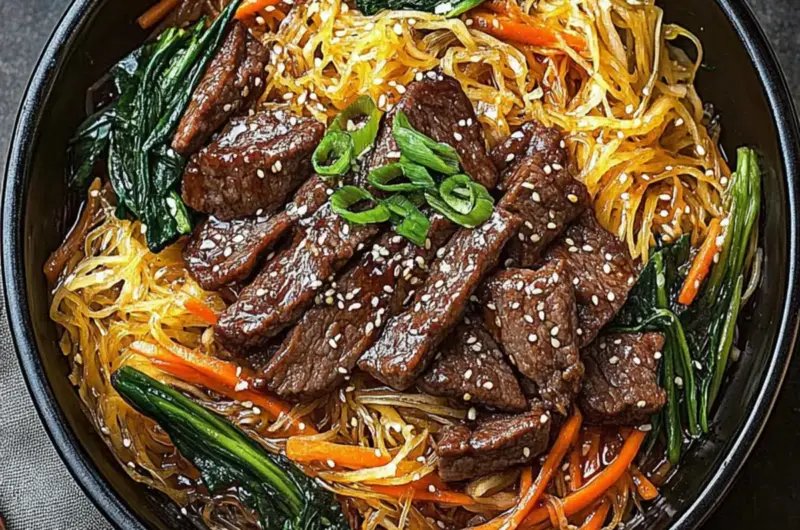
When I first tasted Japchae at a vibrant Korean festival, I was instantly enchanted. The sight of glistening sweet potato noodles intermingled with colorful vegetables was as appealing as the rich, nutty aroma that wafted through the air. This traditional dish, known for its chewy texture and subtly sweet flavor, quickly became a staple in my kitchen. What I love most about Japchae is its versatility; whether I’m whipping it up for a cozy family dinner or impressing friends at a potluck, I can easily customize it with beef, chicken, or even tofu. Plus, it’s a delightful way to inject health and flavor into my meals while steering clear of the same old fast-food routine.
Join me on this culinary journey as we recreate this beautiful dish that not only nourishes the body but also warms the heart, transforming any meal into a celebration of flavors and colors!

Why is Japchae a Must-Try Dish?
Versatile Choices: Japchae offers endless possibilities with a range of proteins, from beef to tofu, catering to all preferences.
Healthful Ingredients: Packed with colorful veggies and nutrient-rich sweet potato noodles, it’s a wholesome delight.
Simple Steps: Quick to prepare, this recipe makes cooking enjoyable without the stress, perfect for busy nights.
Crowd-Pleaser: Whether it’s a family dinner or a potluck, everyone will be coming back for seconds!
Cultural Flavor: With roots in Korean traditions, preparing Japchae is like sharing a piece of history at your table.
Dive into the world of flavors with your homemade Japchae, and embrace a delightful dish that elevates your culinary repertoire!
Japchae Ingredients
• Dive into the delicious world of Japchae with these essential ingredients!
For the Noodles
- Sweet Potato Noodles (Dangmyeon) – These chewy noodles lend a unique texture; they’re essential for a traditional Japchae.
For the Protein
- Beef (or alternative protein) – Use thinly sliced beef for a savory depth; try chicken or tofu for a lighter option.
For the Vegetables
- Carrots – Add color and crunch; cut them into matchsticks for even cooking.
- Spinach – Provides vibrant greens and nutrients; consider using kale or bok choy as substitutes.
- Bell Peppers – Their sweetness complements the dish wonderfully; any color works!
For the Sauce
- Soy Sauce – Brings umami flavor and seasoning; low-sodium varieties are great for lighter dishes.
- Sesame Oil – Adds a nutty aroma; don’t skip this ingredient for authentic taste!
For Garnish
- Green Onions – Fresh and colorful, these make a lovely garnish; can also use chives if preferred.
With these ingredients, you’re set to create a fabulous Japchae that promises to be a hit at your table!
How to Make Japchae
-
Prep Ingredients: Soak sweet potato noodles in warm water for about 30 minutes until soft and translucent. While the noodles soak, chop your vegetables and thinly slice the beef.
-
Stir-Fry Protein: Heat 1 tablespoon of oil in a large pan over medium-high heat. Cook the beef for about 3-4 minutes until browned and cooked through. Remove the beef from the pan and set aside.
-
Cook Vegetables: In the same pan, add a splash more oil if needed, and stir-fry the carrots and bell peppers for 2-3 minutes until tender-crisp. Add the spinach last, cooking just until wilted, around 1 minute.
-
Combine All Ingredients: Return the cooked beef to the pan with the vegetables. Drain the sweet potato noodles and add them, then pour in 3 tablespoons of soy sauce and 1 tablespoon of sesame oil. Toss everything together to ensure even coating and warmth, about 2 minutes.
-
Finishing Touches: Cook until everything is heated through, then garnish with sliced green onions just before serving for a fresh crunch.
Optional: Add a sprinkle of sesame seeds for extra flavor and a beautiful finish.
Exact quantities are listed in the recipe card below.
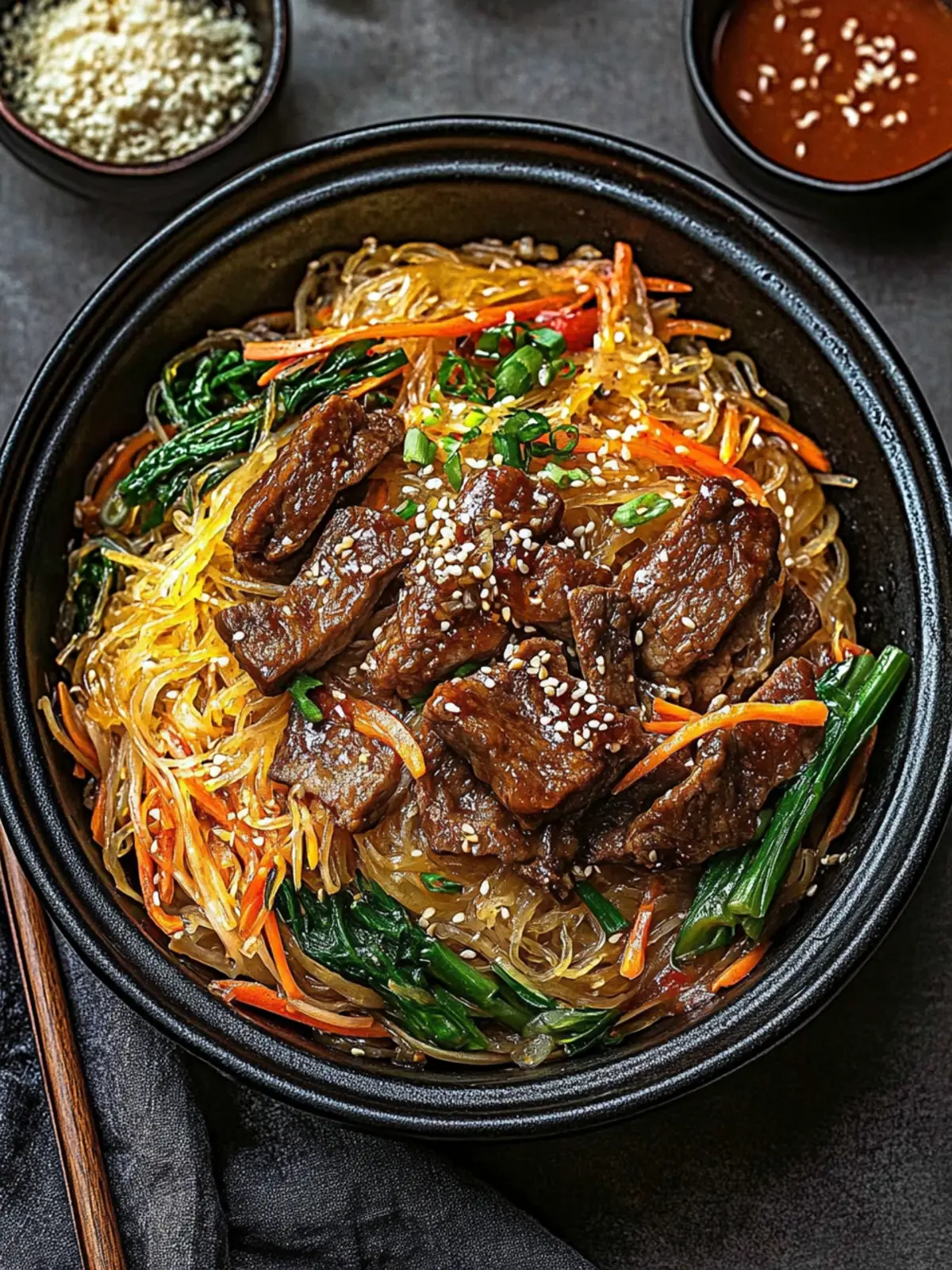
What to Serve with Japchae?
Transform your Japchae into a delightful feast with these satisfying accompaniments that harmonize beautifully with this flavor-packed dish.
-
Crispy Korean Fried Chicken: The crunch and richness of this beloved dish create a wonderful contrast with the chewy noodles.
-
Refreshing Cucumber Salad: A cool and zesty salad enhances the meal, providing a crisp texture to balance Japchae’s softness.
-
Savory Kimchi: The tangy, spicy notes of kimchi elevate the flavors while introducing a traditional Korean element that’s hard to resist.
-
Steamed Rice: A simple side of fluffy rice makes a perfect base to soak up any extra sauce, ensuring every bite is deliciously satisfying.
-
Miso Soup: This warm, umami-rich soup serves as a light starter and complements the savory aspects of Japchae flawlessly.
-
Sesame Green Beans: Tender green beans tossed with sesame oil deliver a crunchy side that mirrors the vibrant flavors of your main dish.
Bring your table to life with these tempting side options that transform Japchae into a meal to remember!
Make Ahead Options
Preparing Japchae in advance is a great way to streamline your meal planning and save time on busy weeknights! You can soak the sweet potato noodles and chop your vegetables up to 24 hours in advance. Store the noodles and veggies separately in airtight containers in the refrigerator to maintain their freshness. If you’re using beef or tofu, you can marinate it ahead of time as well. When you’re ready to enjoy your Japchae, simply stir-fry the protein and vegetables as outlined in the recipe, toss in the prepped noodles with the sauce, and heat everything through for just as delicious results as if you made it fresh. Enjoy this hassle-free approach to a beloved dish!
Japchae Variations & Substitutions
Feel free to play with this dish and let your creativity shine as you add your favorite twists.
-
Protein Swap: Replace beef with thinly sliced chicken or tofu for a lighter option. Each protein brings a unique flavor to keep it fresh.
-
Spicy Kick: Add 1 tablespoon of gochujang to the stir-fry for an exciting heat. This enhances the dish’s depth while providing a warm finish.
-
Vegan Delight: Use plant-based proteins like tempeh or seitan instead of meat. These options give you the same hearty texture while keeping it completely vegan.
-
Extra Veggies: Mix in sliced mushrooms or zucchini for added flavor and nutrition. Seasonal vegetables brighten up the dish beautifully.
-
Gluten-Free: Opt for tamari instead of soy sauce for a gluten-free alternative. This maintains the umami taste without the gluten.
-
Noodle Alternatives: If you can’t find sweet potato noodles, rice noodles work just as well. They will offer a different texture while still being delicious.
-
Crunch Factor: Toss in roasted nuts like cashews or walnuts for a lovely crunch. This adds an exciting dimension to each bite.
-
Herb Infusion: Add fresh herbs like cilantro or basil before serving for a vibrant and fragrant finish. Just a sprinkle can elevate the entire dish!
How to Store and Freeze Japchae
- Fridge: Store leftover Japchae in an airtight container for up to 3 days. Make sure it’s completely cooled before sealing to avoid excess moisture.
- Freezer: For longer storage, freeze Japchae in a freezer-safe container for up to 2 months. It’s best to freeze without any added proteins to maintain texture.
- Reheating: Thaw frozen Japchae in the fridge overnight, then reheat in a pan over medium heat until warmed through. Add a splash of water or soy sauce for moisture.
- Tip: Enjoy freshly made Japchae for optimal texture, but don’t hesitate to make extra for delicious meal prep!
Expert Tips for Japchae
- Watch the Soaking: Soak the sweet potato noodles long enough until soft, but avoid over-soaking to prevent mushiness. Aim for a tender, yet chewy texture.
- Heat Control: Maintain medium-high heat while stir-frying—this ensures the ingredients cook evenly and stay crisp. Overcrowding the pan can lead to steaming instead of frying!
- Balance Flavors: Adjust soy sauce and sesame oil according to your taste preference; start with less and add more if needed to achieve the perfect flavor for your Japchae.
- Veggie Variety: Feel free to use seasonal vegetables for a colorful and nutritious mix. Mixing in mushrooms or zucchini can give your dish extra depth!
- Make-ahead Option: Japchae tastes great the next day! Simply store leftovers in an airtight container for up to three days, making it a wonderful meal prep choice.
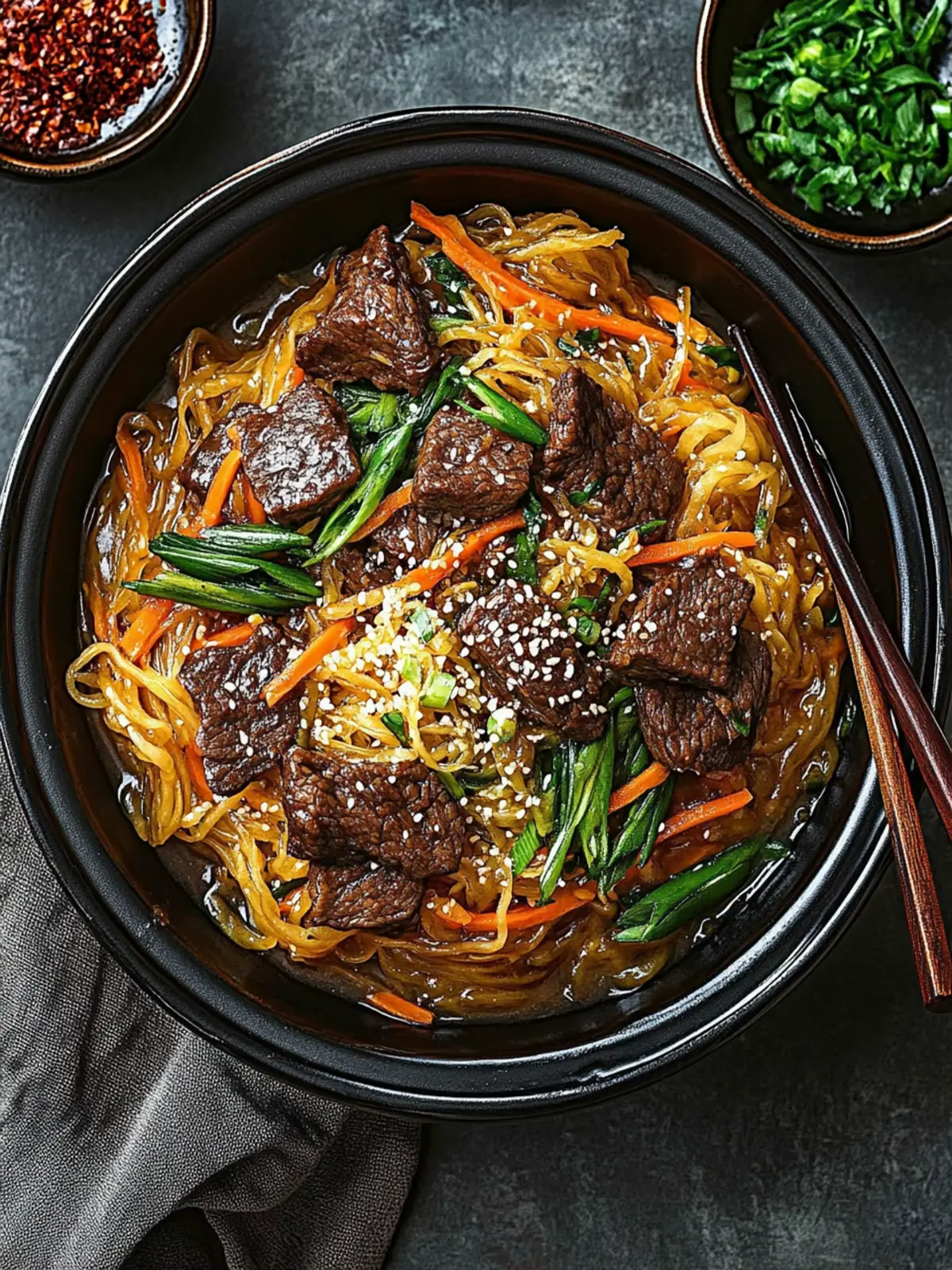
Japchae (Korean Stir-Fried Sweet Potato Noodles) Recipe FAQs
What type of sweet potato noodles should I use for Japchae?
Absolutely! Look for “Dangmyeon,” which are Korean sweet potato noodles known for their chewy texture. If you’re unable to find them, you can substitute with rice noodles for a similar result, but they may have a different flavor profile.
How should I store leftover Japchae?
For the best quality, store leftover Japchae in an airtight container in the refrigerator for up to 3 days. Ensure that the noodles have completely cooled before sealing to prevent any moisture buildup that could affect texture.
Can I freeze Japchae, and how?
Yes, you can! To freeze Japchae, place it in a freezer-safe container without any added proteins, as freezing can alter the texture of meats. It can be stored for up to 2 months. When ready to enjoy, thaw it in the fridge overnight, then reheat in a hot pan, adding a splash of water or soy sauce if needed to restore moisture.
What can I do if my Japchae is too salty?
If your Japchae turns out too salty, don’t worry! You can balance the flavors by adding more vegetables to dilute the saltiness. If this isn’t enough, consider tossing in some cooked rice or additional noodles to absorb the excess seasoning. Taste as you go, and it can help you achieve your desired balance!
Is Japchae suitable for those with gluten allergies?
While traditional Japchae uses soy sauce, which contains gluten, you can make it gluten-free by substituting regular soy sauce with a gluten-free tamari or coconut aminos. Always check other ingredients for gluten content and feel free to create a much-loved dish that accommodates dietary needs!
Can pets eat Japchae safely?
As a general rule, it’s not advisable to feed pets human food unless it’s pet-safe. Ingredients like garlic and onions, often found in soy sauce, can be toxic to pets. If you’re wanting to share some veggies or noodles with your furry friend, ensure they’re plain and unseasoned for safety.
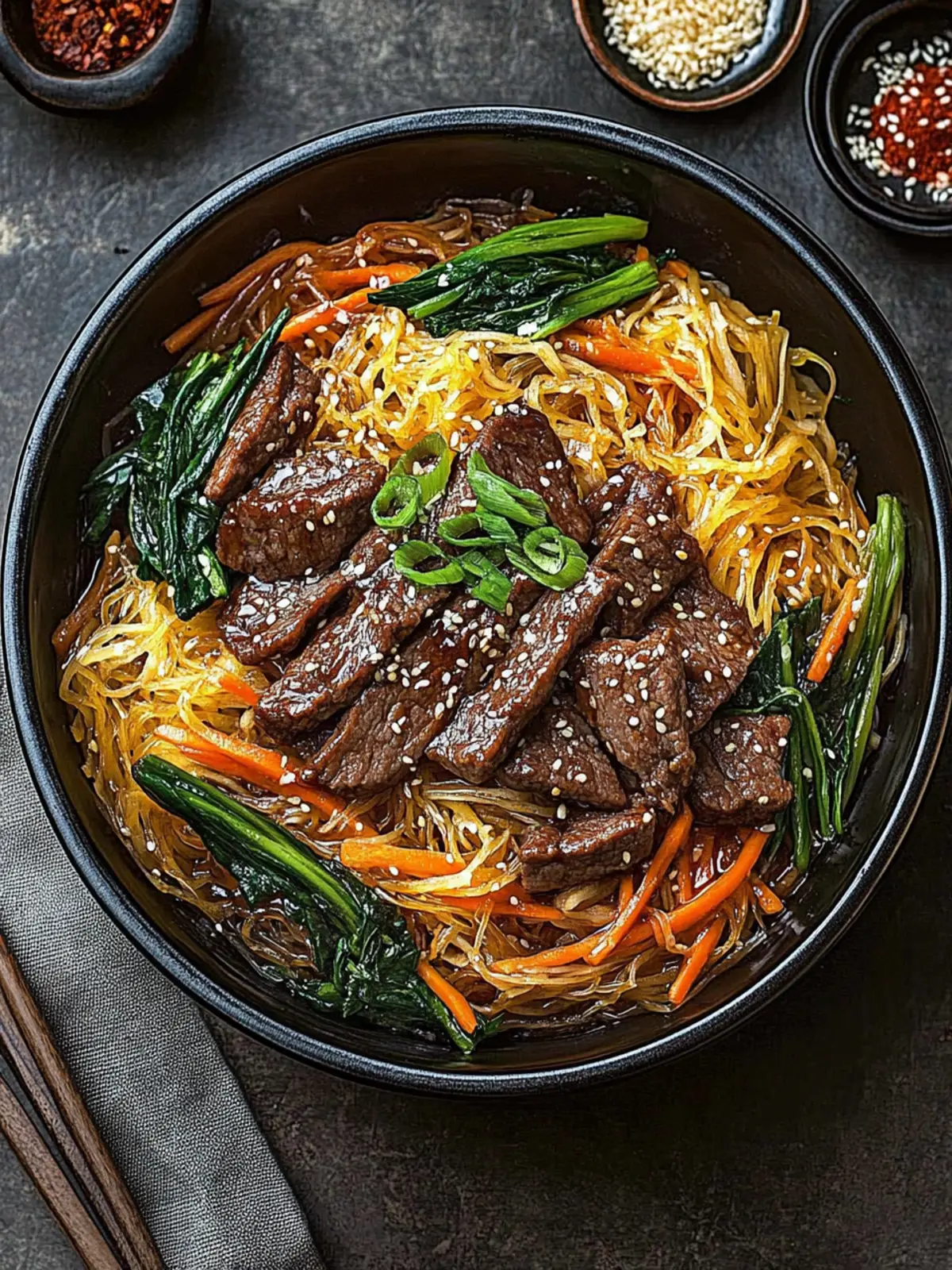
Irresistible Japchae: Your New Favorite Sweet Potato Noodle Dish
Ingredients
Equipment
Method
- Soak sweet potato noodles in warm water for about 30 minutes until soft and translucent.
- Heat 1 tablespoon of oil in a large pan over medium-high heat. Cook the beef for about 3-4 minutes until browned and cooked through. Remove the beef from the pan and set aside.
- In the same pan, add more oil if needed, and stir-fry the carrots and bell peppers for 2-3 minutes until tender-crisp. Add the spinach last, cooking just until wilted, around 1 minute.
- Return the cooked beef to the pan with the vegetables. Drain the sweet potato noodles and add them, then pour in the soy sauce and sesame oil. Toss everything together for even coating and warmth, about 2 minutes.
- Cook until everything is heated through, then garnish with sliced green onions just before serving.