
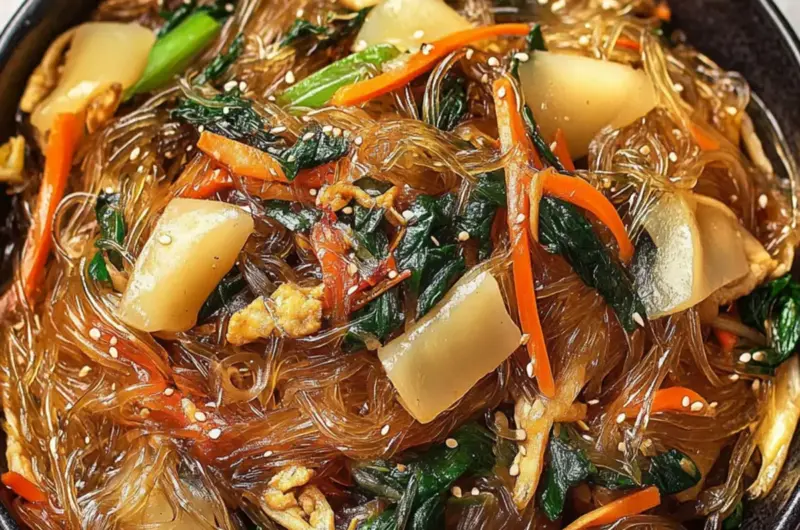
There’s something undeniably comforting about a sizzling skillet filled with bright colors and tantalizing aromas, and that’s exactly what you’ll find when you make Japchae, a traditional Korean glass noodle stir fry. The moment I tried this dish for the first time, I was captivated by the delicate texture of the sweet potato noodles combined with savory beef and fresh vegetables. It’s a vibrant feast for the senses!
When I first came across Japchae, I was on a mission to break out of my same-old dinner routine. I wanted a recipe that was not just quick to prepare but also bursting with flavor. This delightful dish checks all the boxes. It’s versatile enough to use whatever vegetables you have on hand, yet special enough for a gathering. With its glossy noodles drenched in a sweet and savory sauce, it’s impressive but simple—perfect for impressing friends or for a cozy night in.
So, let’s dive into this explosion of taste that is bound to keep your family and friends coming back for more!
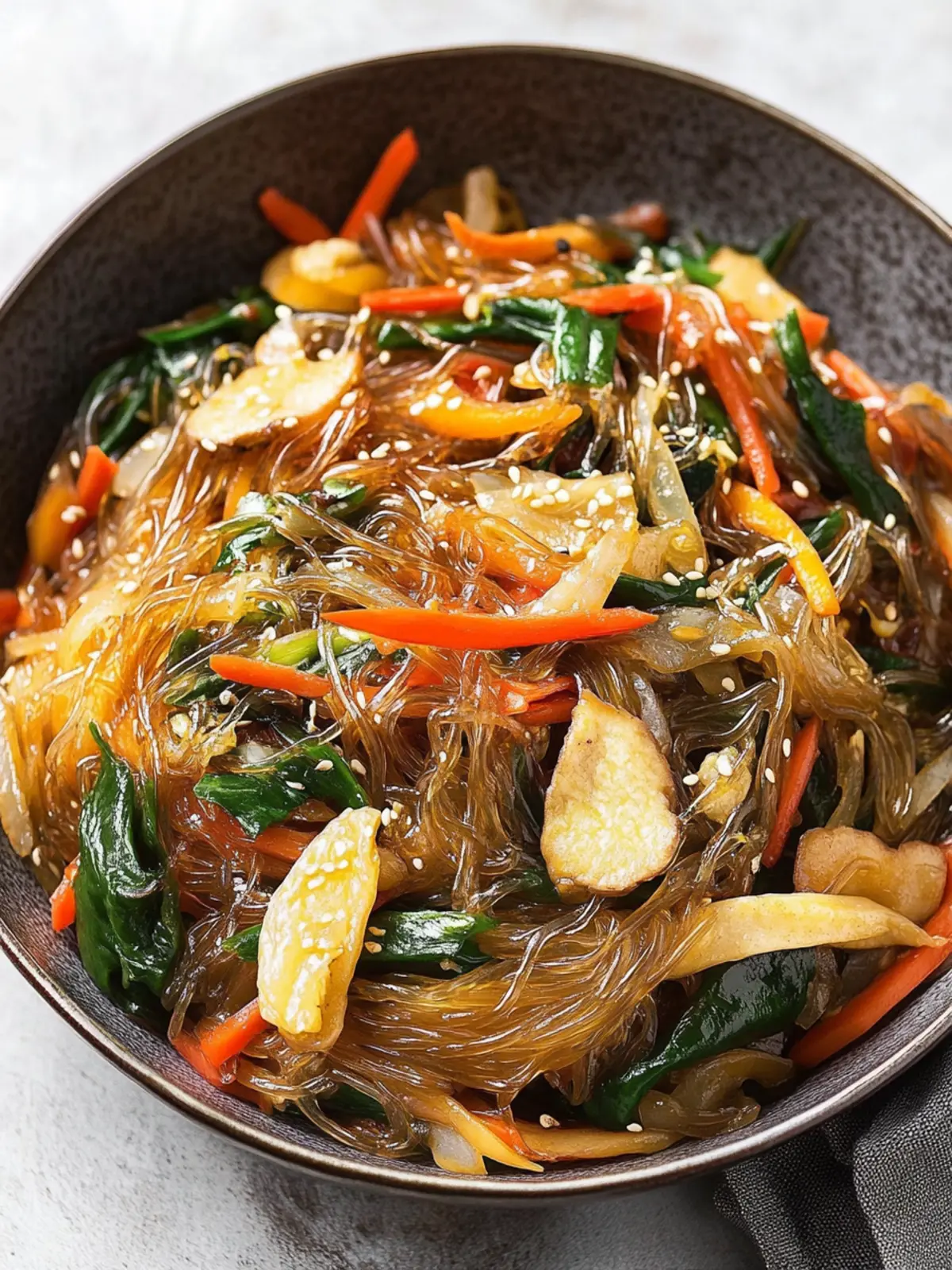
Why is Japchae a must-try dish?
Flavor Explosion: Each bite of Japchae is a delightful burst of colors and tastes, featuring tender beef, fresh veggies, and sweet potato noodles coated in a savory-sweet sauce.
Easy to Customize: This recipe invites you to get creative! Swap in your favorite vegetables, making it a perfect way to use up those odds and ends in your fridge.
Quick and Satisfying: Ready in just under 30 minutes, it’s a reliable choice for those busy weeknights when time is tight but you still want a homemade meal.
Crowd-Pleaser: Impress your family and friends with this stunning dish that looks as good as it tastes, ensuring everyone leaves the table happy!
Wholesome Ingredients: Packed with nutrient-rich ingredients like spinach and carrots, this stir fry not only pleases the palate but also nourishes the body.
Dive deeper into Korean cuisine with this Japchae recipe that brings vibrant flavor into your kitchen!
Japchae Ingredients
• Elevate your cooking with this delicious Japchae recipe!
For the Noodles
• Sweet potato glass noodles – These unique noodles have a chewy texture that perfectly absorbs flavors.
For the Meat
• Beef or pork – Tender strips add a savory depth; feel free to use chicken or tofu for a lighter option.
For the Veggies
• Egg – Adds richness and helps bind the ingredients together.
• Carrot – Fresh, colorful slices bring a slight sweetness.
• Yellow onion – Thinly sliced for a sweet, aromatic touch.
• Mushrooms – Enhance the umami flavor in your dish.
• Baby spinach – Packed with nutrients and adds vibrant color to the mix.
• Green onion – Final touch for freshness and a pop of green.
For the Sauce
• Soy sauce (light sodium) – Provides the essential savory base for your Japchae.
• Honey – Balances the saltiness with a touch of natural sweetness.
• Brown sugar – Intensifies the sweetness, creating a rich flavor profile.
• Toasted sesame oil – Gives a nutty aroma and deep flavor to your dish.
For Cooking
• Oil for cooking – Use a neutral oil like vegetable or canola for frying.
• Salt and black pepper – Season to taste, enhancing the flavors of your ingredients.
For Garnish
• Toasted sesame seeds – Add a delightful crunch and visual appeal when sprinkled on top.
How to Make Japchae
-
Cook the noodles: Boil the sweet potato glass noodles according to package instructions until tender, then drain and set aside. The noodles should have a nice chewy texture.
-
Brown the meat: Heat oil in a skillet over medium heat. Add the beef or pork and cook until browned and fully cooked, about 5-7 minutes. This adds a savory base to your dish.
-
Scramble the eggs: Push the browned meat to one side of the skillet. Pour in the beaten eggs and scramble until fully cooked, creating a fluffy texture that will mix in wonderfully.
-
Stir-fry the veggies: Add the julienned carrot, sliced onion, and mushrooms to the skillet. Stir-fry for about 3-4 minutes until the vegetables are vibrant and tender.
-
Combine with noodles: Toss the cooked noodles and baby spinach into the skillet. Stir everything together to combine the textures and flavors, cooking just until the spinach wilts.
-
Prepare the sauce: In a small bowl, whisk together soy sauce, honey, brown sugar, and toasted sesame oil. Pour this over the noodle and meat mixture, stirring until everything is evenly coated.
-
Season and garnish: Season your dish with salt and black pepper to taste. Garnish with green onion and toasted sesame seeds for that extra touch of flavor and crunch.
Optional: For extra richness, add a few drops of chili oil before serving.
Exact quantities are listed in the recipe card below.
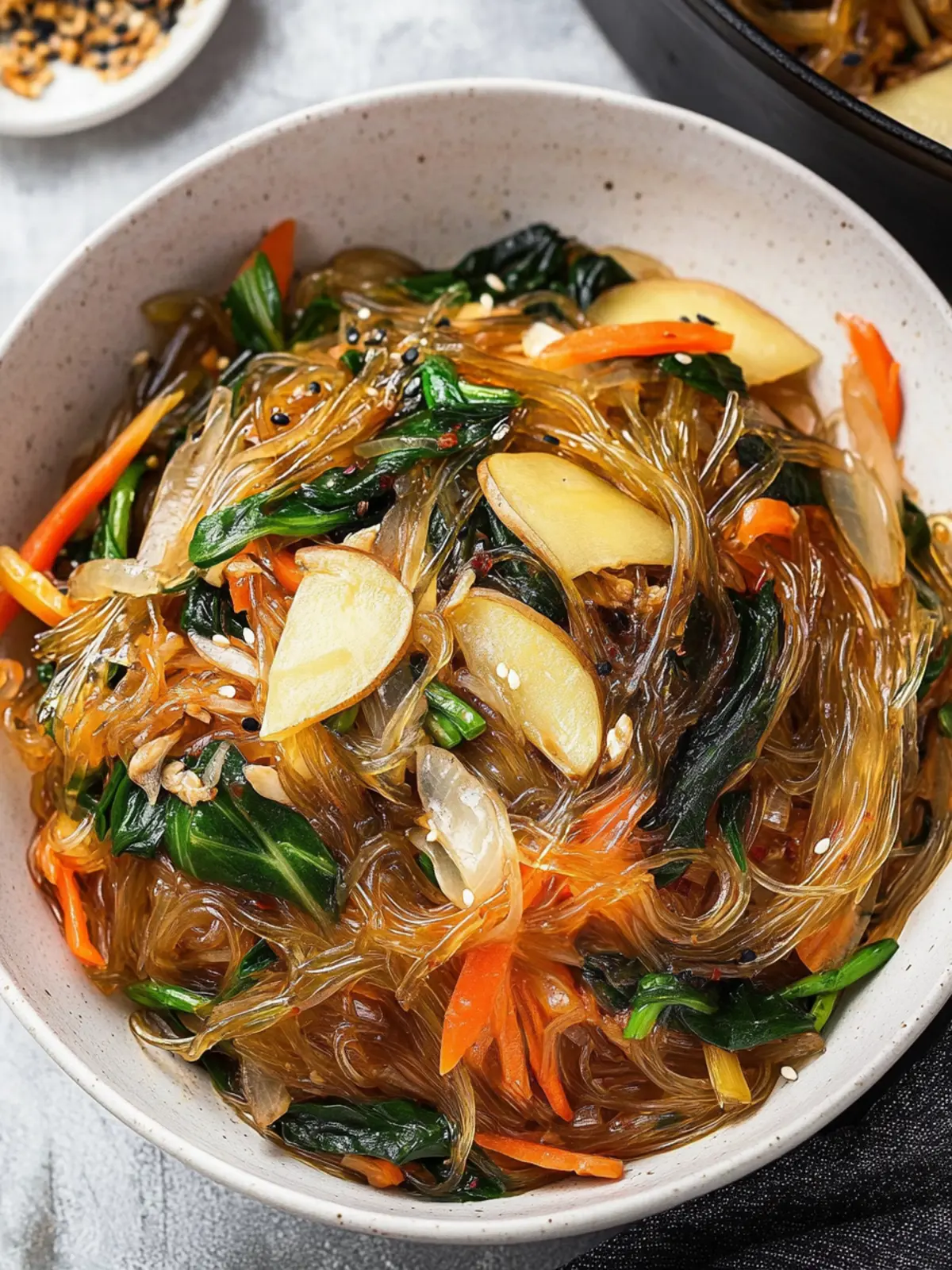
Expert Tips for Perfect Japchae
-
Noodle Technique: Rinse the cooked sweet potato glass noodles with cold water to prevent them from sticking together. This tip helps maintain that delightful chewiness.
-
Meat Choice: Use thinly sliced beef or pork for quicker cooking. Marinate the meat for 15 minutes in soy sauce and a bit of sesame oil for more depth of flavor!
-
Veggie Variety: Feel free to mix and match vegetables based on what you have. Just be cautious with water-rich veggies like zucchini, as they can dilute the sauce.
-
Sauce Balance: Always taste your sauce blend before adding it to the noodles. Adjust the sweetness or saltiness according to your preference for the perfect Japchae!
-
Serve Warm: For the best flavor, serve your Japchae right after cooking while it’s hot. The aroma will entice everyone to gather around the table!
What to Serve with Japchae?
A plate of colorful, aromatic Japchae can be the centerpiece of an exquisite meal, but the right sides can elevate it even further.
-
Steamed Broccoli: Bright green and crunchy, steamed broccoli adds a healthy crunch and a beautiful visual contrast to the dish.
-
Kimchi: This Korean staple brings a spicy, tangy kick that complements the sweet flavors of Japchae perfectly, enhancing the overall dining experience.
-
Cucumber Salad: Refreshing and crisp, a lightly seasoned cucumber salad introduces a cool element that balances the warmth of the stir-fry.
-
Sesame Crusted Tofu: This protein-packed side is a great addition for vegetarians or anyone looking to add more plant-based options. The sesame crust mirrors the flavors of the Japchae.
-
Mandarin Orange Gem: The sweet and tangy flavor of mandarin oranges provides a bright, refreshing end to the meal. Their citrus notes will cleanse the palate beautifully.
-
Korean Rice Cake: Chewy and delicious, these rice cakes offer a delightful texture and can be served sweet or spicy, making them a versatile side dish.
Each pairing enhances the delightful flavors of Japchae and creates an inviting spread that’s perfect for sharing with family and friends!
Japchae Variations & Substitutions
Feel free to adapt this dish to fit your tastes; the beauty of Japchae lies in its versatility!
-
Vegetarian: Replace beef or pork with tofu or tempeh. Add a splash more soy sauce for extra flavor.
Choosing tofu not only adds protein but also absorbs all the delicious umami goodness from the sauce, making it a fulfilling choice for plant-based eaters. -
Spicy Kick: Add sliced chili peppers or a dash of chili oil for heat. This twist enhances the overall flavor profile.
Feeling adventurous? Experiment with your favorite type of chili to find the perfect level of spicy for your palate! -
Extra Crunch: Toss in some nuts, like cashews or peanuts, right before serving. This adds a lovely texture.
The crunch contrasts nicely with the soft noodles and tender meat or veggies, elevating the overall bite. -
Zoodles: Swap half the glass noodles for spiralized zucchini for a lighter option. This makes the dish low-carb without sacrificing flavor!
Zoodles absorb the savory sauce beautifully, making every mouthful a delight. -
Umami Boost: Consider adding a tablespoon of miso paste for a deeper flavor. Mix it into the sauce before pouring it over the dish.
This adds a layer of complexity that will tantalize your taste buds, setting your Japchae apart from the rest! -
Different Veggies: Use seasonal veggies like bell peppers or snap peas. This gives vibrant colors and fresh tastes throughout the year.
Mixing in your favorites not only makes it visually appealing but also customizes the dish uniquely to you! -
Fruity Twist: Add thin slices of mango or pineapple for a subtle sweetness. This exotic addition brightens the dish.
The fruit can create a beautiful contrast against the savory elements, offering a refreshing finish to each bite. -
Sesame Variations: Switch plain sesame seeds for black sesame seeds. They provide a stronger flavor and a beautiful visual contrast.
Black sesame adds a nutty richness that enhances the overall taste and aesthetic of your Japchae!
How to Store and Freeze Japchae
Room Temperature: Enjoy your leftovers within 2 hours of cooking for optimal freshness. If left unrefrigerated, consume within 4 hours to ensure safety.
Fridge: Store your Japchae in an airtight container for up to 3 days. Reheat it gently in the microwave or a skillet on low heat, adding a splash of water to prevent drying out.
Freezer: For long-term storage, freeze your Japchae in portioned airtight containers for up to 2 months. Thaw in the fridge overnight before reheating.
Reheating: When ready to eat, warm it in a skillet over medium heat until heated through, adding a bit of oil if needed for that freshly cooked taste!
Make Ahead Options
These delectable Japchae noodles are perfect for meal prep enthusiasts! You can cook the sweet potato glass noodles and store them in an airtight container for up to 3 days in the refrigerator, which helps save time during busy weeknights. Additionally, the beef or pork can be browned and kept in the fridge for up to 2 days, ensuring a savory base is ready to go. When you’re ready to enjoy your Japchae, simply reheat the prepped ingredients in a skillet, add the fresh vegetables, egg, and sauce, stir-frying until everything is warmed through and the spinach has wilted. Remember, this make-ahead method keeps your dish just as delicious without compromising the fresh flavors!
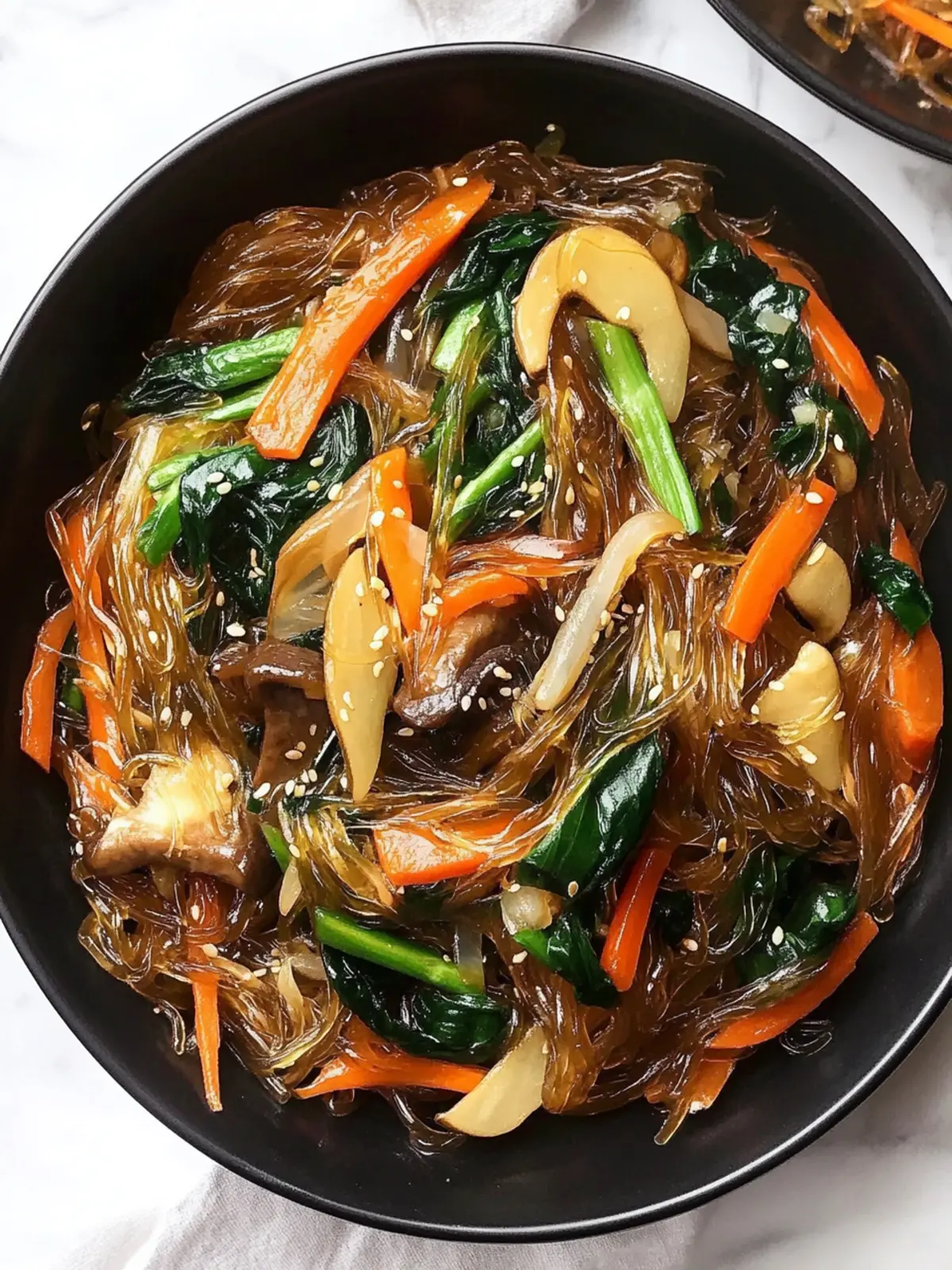
Japchae Recipe FAQs
How do I choose the right sweet potato glass noodles for Japchae?
Absolutely! When selecting sweet potato glass noodles, look for packages that indicate they are made purely from sweet potato starch. They should be transparent and have a slight sheen. Avoid any that have a cloudy appearance or irregular shapes, as they may not cook properly.
How should I store leftover Japchae?
Very good question! After enjoying your meal, place any leftovers in an airtight container in the fridge. They can last up to 3 days when stored properly. Gently reheat in the microwave or in a skillet over low heat, adding a splash of water to help restore moisture.
Can I freeze Japchae?
Yes, you can! To freeze your Japchae, let it cool completely, then transfer it into portioned airtight containers or freezer bags. It will keep well for up to 2 months. When you’re ready to enjoy it again, simply thaw it in the fridge overnight, then reheat on the stovetop until warmed through.
What should I do if my noodles become sticky?
Don’t worry, it happens! If your sweet potato glass noodles turn sticky, this might be due to overcooking or not rinsing them in cold water afterward. To remedy this, rinse the cooked noodles under cold water immediately after draining. If they’re already sticky, gently separate them with a splash of oil or warm water while stirring over low heat.
Is this recipe suitable for people with dietary restrictions, such as gluten intolerance?
Absolutely! To make your Japchae gluten-free, simply use gluten-free soy sauce or tamari instead of regular soy sauce. As always, double-check all ingredient labels, especially for any sauces or seasonings, to ensure they’re gluten-free and safe for your dietary needs.
How do I ensure my veggies stay crisp in the stir fry?
To keep your vegetables crunchy, make sure not to overcrowd the skillet when stir-frying. Cook them in batches if needed to maintain that beautiful texture. Stir-fry on high heat and keep the cooking time short—about 3-4 minutes should do the trick! This method allows the veggies to sauté properly without getting mushy.
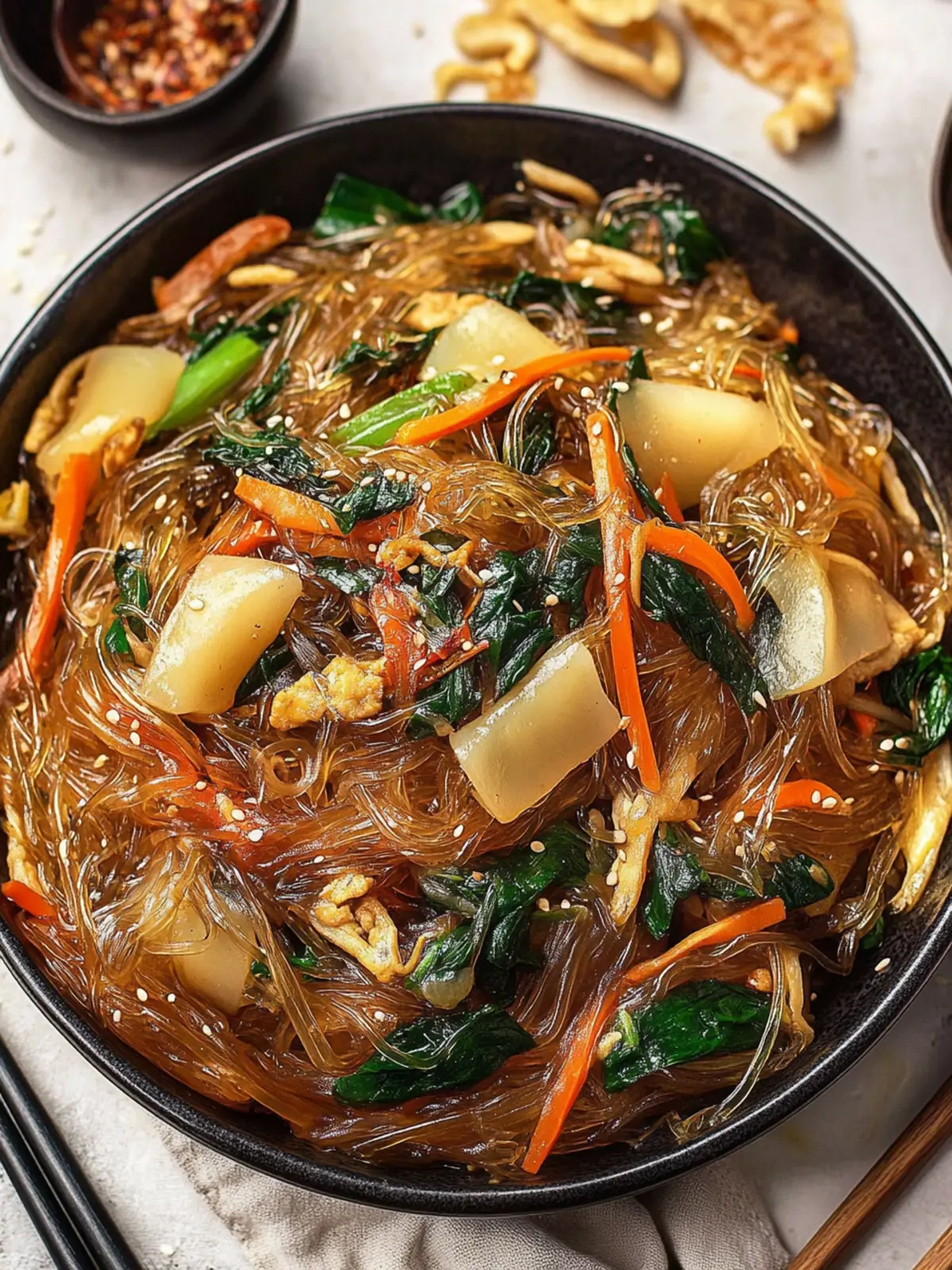
Delicious Japchae: Ultimate Korean Glass Noodle Stir Fry Recipe
Ingredients
Equipment
Method
- Cook the noodles: Boil the sweet potato glass noodles according to package instructions until tender, then drain and set aside.
- Brown the meat: Heat oil in a skillet over medium heat. Add the beef or pork and cook until browned and fully cooked, about 5-7 minutes.
- Scramble the eggs: Push the browned meat to one side of the skillet. Pour in the beaten eggs and scramble until fully cooked.
- Stir-fry the veggies: Add the julienned carrot, sliced onion, and mushrooms to the skillet. Stir-fry for about 3-4 minutes.
- Combine with noodles: Toss the cooked noodles and baby spinach into the skillet. Stir everything together to combine.
- Prepare the sauce: In a small bowl, whisk together soy sauce, honey, brown sugar, and toasted sesame oil. Pour this over the noodle and meat mixture.
- Season and garnish: Season your dish with salt and black pepper to taste. Garnish with green onion and toasted sesame seeds.