
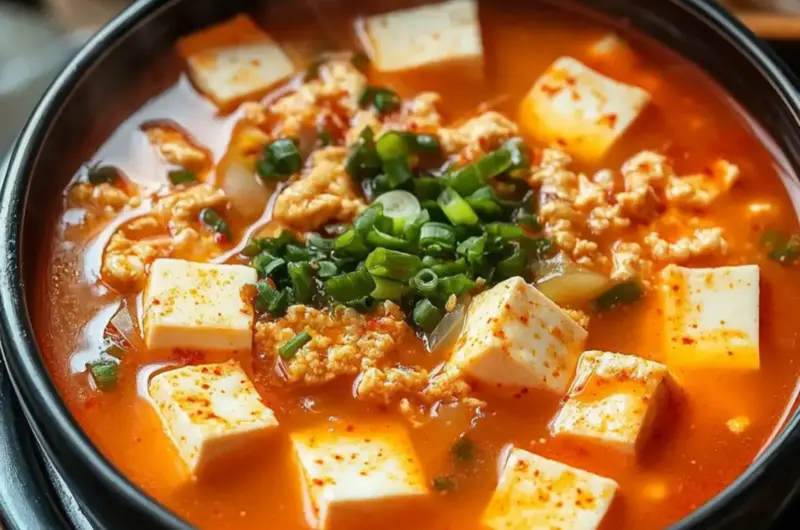
Have you ever craved comfort food that feels like a warm hug? When I first tried Sundubu Jjigae, a traditional Korean soft tofu stew, I was instantly transported to a bustling Seoul kitchen. The way the soft tofu mingles with the savory seafood, combined with the subtle kick of gochugaru, is pure magic. I stumbled upon this dish one chilly evening when I was searching for something satisfying yet easy to whip up, and it quickly became my go-to recipe for cozy nights.
Picture this: as the onions sauté, their sweet scent fills the air, preparing your taste buds for the delight that’s to come. In no time, you’ll have a steaming bowl of this hearty stew that not only nourishes but also impresses. It’s perfect for those evenings when all you want is to unwind and indulge after a long day. Join me in creating this crowd-pleasing dish that’s bound to become a favorite in your home!
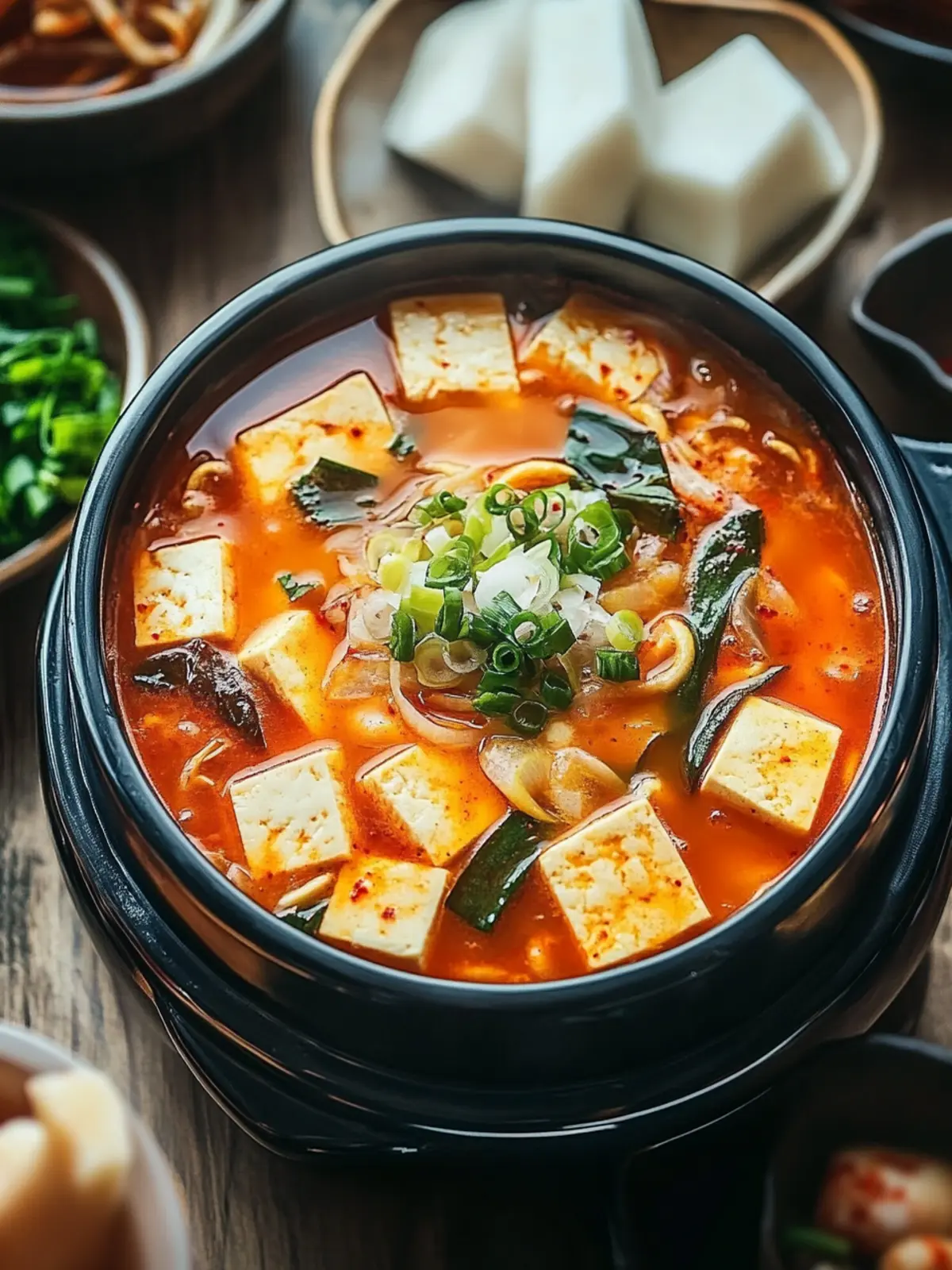
Why is Sundubu Jjigae so special?
Comforting and rich flavors await you in every bowl of this delightful stew. Simplicity lies in its preparation, as it showcases soft tofu and gets ready in no time. Nourishing ingredients like seafood and gochugaru add depth to this warming dish. Versatile enough to suit various palates, it’s perfect for a quick weeknight dinner or a cozy gathering with friends. If you’re looking to spice up your meal repertoire, this recipe is just what you need!
Sundubu Jjigae Ingredients
• Let’s gather what makes this stew shine!
For the Stew
- Soft tofu – the star of Sundubu Jjigae, its creamy texture adds comfort that warms the soul.
- Seafood (clams or shrimp) – provides a delightful ocean flavor, enhancing the richness of the stew.
- Onion, chopped – sautéed until translucent, it gives a sweet base that complements the other ingredients.
- Gochugaru (Korean chili flakes) – this spice adds a gentle kick and a beautiful color to the dish.
- Egg – it brings richness and a velvety finish when stirred into the hot stew.
Now that we’ve gathered our ingredients, let’s dive into the heart of this recipe and create a bowl of pure joy!
How to Make Sundubu Jjigae
-
Prepare the seafood: Clean the clams thoroughly or devein the shrimp carefully, ensuring they are ready to bring their ocean flavor to the stew. It’s essential to start with fresh seafood for the best taste.
-
Sauté the onion: Heat a pan over medium heat and add a splash of oil. Sauté the chopped onion until it turns translucent, releasing a sweet aroma that fills your kitchen and sets the stage for the stew.
-
Cook the seafood: Add the prepared seafood to the pan and cook until just done, approximately 3-4 minutes. You’ll know it’s ready when the shrimp is pink or the clams begin to open up.
-
Add the tofu: Gently add the soft tofu to the mixture, being cautious not to break it apart. You want those beautiful, creamy chunks to hold their shape and contribute to the dish’s comforting texture.
-
Mix in the gochugaru: Sprinkle the gochugaru over the stew and stir gently to combine everything. This step adds a warm heat and a pop of color, elevating the dish with its unique flavor profile.
-
Incorporate the egg: Beat the egg in a separate bowl and pour it slowly into the pan, stirring the mixture just until the egg is set – about a minute. This enriches the stew and takes it to heartwarming levels.
Optional: Serve with a sprinkle of green onions for added freshness!
Exact quantities are listed in the recipe card below.
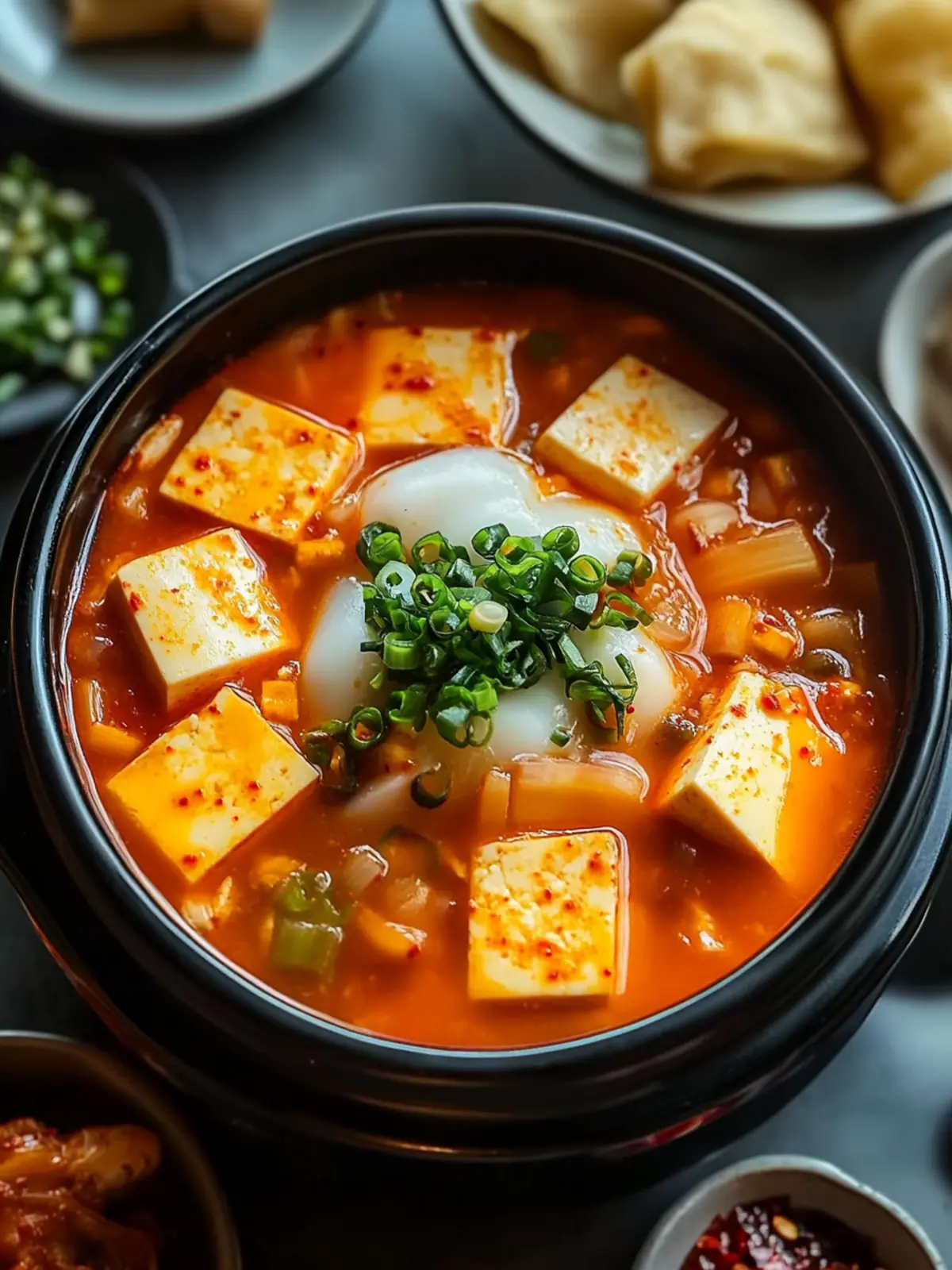
Sundubu Jjigae Variations & Substitutions
Feel free to explore these delicious alternatives and make this cozy stew your own masterpiece!
-
Vegetarian: Substitute the seafood with mushrooms (like shiitake or oyster) for a delightful umami experience. The rich, earthy flavor pairs beautifully with the creamy tofu.
-
Spicy Kick: Add a splash of sriracha or a dash of chili oil along with the gochugaru to amp up the heat. This twist adds a fiery contrast that’s sure to excite your taste buds.
-
Creamy Dream: For an even creamier texture, mix in a dollop of coconut milk. This adds a rich sweetness that complements the savory elements wonderfully.
-
Dairy-Free: Use a vegan egg alternative or skip the egg entirely for a plant-based version of this stew. You’ll still enjoy a hearty, satisfying meal without compromising flavor.
-
Additional Veggies: Throw in some bok choy, zucchini, or spinach for an extra nutritional boost. Adding vegetables not only enhances the stew but also brings a burst of color to the bowl.
-
Heat Level Adjustments: If you’re craving a milder flavor, reduce the gochugaru and try adding some sweet paprika instead. This keeps the dish flavorful without overwhelming those with sensitive palates.
-
Flavor Infusion: Add a splash of soy sauce or seasoned rice vinegar for a saltier kick that adds depth. This extra layer of flavor can transform your Sundubu Jjigae into a truly memorable entrée.
-
Sustaining Protein: Incorporate silken tofu or tempeh for a protein-rich, plant-based option. Both ingredients offer unique textures that blend seamlessly into the stew.
What to Serve with Sundubu Jjigae?
Are you ready to elevate your cozy meal with delightful enhancements that will complement every spoonful of this warm stew?
-
Steamed Jasmine Rice: Serve with fluffy jasmine rice to soak up the savory broth, creating a hearty and comforting pairing.
-
Kimchi: This fermented side dish offers a tangy crunch that contrasts beautifully with the warm softness of the stew, enhancing the overall flavor profile.
-
Pickled Radishes: Their crispness and slight sweetness cleanse the palate and provide a refreshing balance against the rich textures of the Sundubu Jjigae.
-
Korean Fried Chicken: Crispy, spicy, and savory, this beloved dish adds a delightful crunch to your meal, making every bite a delightful experience.
-
Garlic Naan: Pair with warm, pillowy naan to scoop up the stew, introducing an international flare while maintaining a comforting touch.
-
Stir-Fried Vegetables: Colorful veggies sautéed in sesame oil add a nutritious and vibrant contrast to the dish, making it visually and texturally rich.
-
Sooja Wine: A glass of this light and fruity Korean wine complements the flavors beautifully, making your dining experience even more special.
-
Mochi Ice Cream: To finish off on a sweet note, this creamy treat adds a delightful dessert option, balancing the savory nature of the stew with its refreshing flavors.
How to Store and Freeze Sundubu Jjigae
Fridge: Store leftover Sundubu Jjigae in an airtight container for up to 3 days. Keep the tofu intact for the best texture when reheating.
Freezer: Although it’s best enjoyed fresh, you can freeze Sundubu Jjigae in a freezer-safe container for up to 2 months. Just remember that the texture of the tofu may change slightly upon thawing.
Reheating: When ready to enjoy, reheat gently on the stovetop over low heat. Add a splash of water or broth to help restore the stew’s consistency.
Enjoy Freshness: For the best taste and quality, try to consume your Sundubu Jjigae right after cooking. It’s a comforting dish meant to be cherished warm!
Expert Tips for Sundubu Jjigae
-
Choose Fresh Seafood: Always opt for fresh clams or shrimp. Freezing can affect texture, so purchase on the day you plan to cook.
-
Gentle Handling of Tofu: Be careful when adding soft tofu to the pan. A gentle touch preserves its creamy texture—no need to break it apart!
-
Customize the Heat: If you prefer a milder stew, start with less gochugaru. You can always add more to suit your spice tolerance!
-
Perfect the Egg Stir-in: To avoid scrambling, slowly pour in the beaten egg and stir gently. This gives a smooth, velvety finish to your Sundubu Jjigae.
-
Serve Fresh: Enjoy this stew immediately after cooking for the best flavor and texture. It’s all about that comforting warmth right from the pot!
Make Ahead Options
These Sundubu Jjigae (soft tofu stew) are perfect for busy home cooks who want to enjoy a cozy meal without the last-minute rush! You can prepare the seafood and sauté the onions up to 24 hours in advance, then refrigerate them in an airtight container to maintain freshness. When you’re ready to enjoy this comforting dish, simply reheat the mixture gently in a pan, add the soft tofu, sprinkle in the gochugaru, and finish by stirring in the beaten egg until set. This way, you’ll savor a bowl of delicious Sundubu Jjigae with minimal effort on your busy nights!
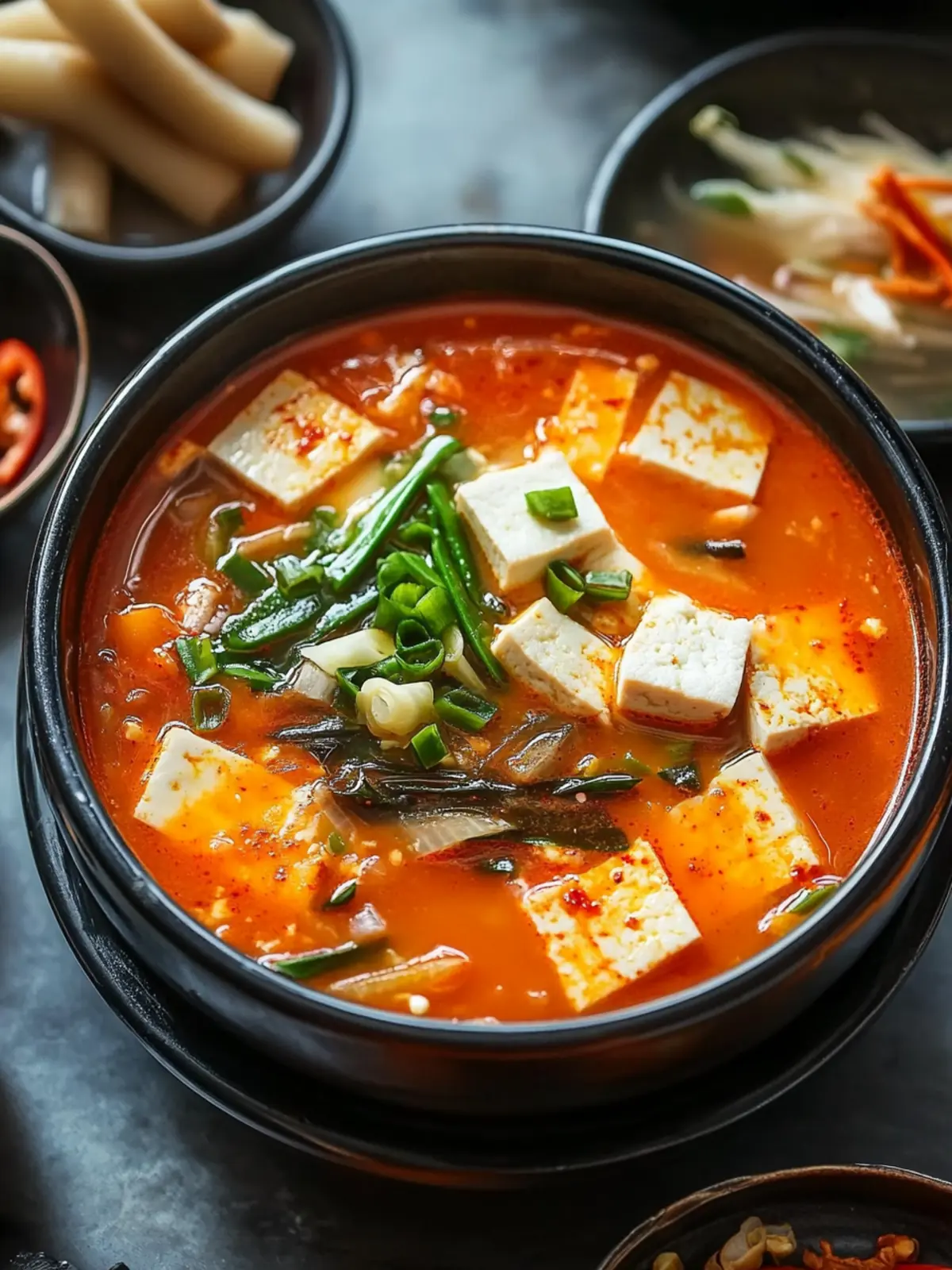
Sundubu Jjigae Recipe FAQs
What kind of seafood is best for Sundubu Jjigae?
Absolutely! Fresh seafood is key to creating a delightful Sundubu Jjigae. I recommend using clams or shrimp for their excellent flavor and texture. If you choose clams, make sure they’re tightly closed before cooking—this indicates freshness. For shrimp, look for those with a natural pink color and a firm feel.
How should I store leftover Sundubu Jjigae?
I often keep leftover Sundubu Jjigae in an airtight container in the fridge for up to 3 days. To retain the soft tofu’s texture, it’s best to leave the tofu intact until you reheat. Just gently reheat it in a saucepan over low heat, almost like giving it a little hug back!
Can I freeze Sundubu Jjigae? If so, how?
Very! To freeze Sundubu Jjigae, pour the cool stew into a freezer-safe container, leaving a little space at the top for expansion. This dish is suitable for freezing for up to 2 months. When you’re ready to enjoy it again, thaw it in the fridge overnight. Then, when reheating, do it slowly on low heat, adding a splash of water or broth to restore the creamy stew consistency.
What if my tofu breaks while cooking?
No worries at all! If your tofu breaks, this can happen sometimes, especially with soft tofu. Simply stir gently, and embrace the creamy texture it adds to your Sundubu Jjigae. You’ll still have that amazing flavor; just remember to handle it with care in the future.
Is Sundubu Jjigae suitable for people with allergies?
Definitely! Sundubu Jjigae can be quite accommodating, but if you or your guests have any allergies, check your ingredients carefully. It’s gluten-free if you use gluten-free soy sauce. If you’re adjusting for dietary preferences, consider leaving out seafood for a vegetarian or vegan version—just add more vegetables like mushrooms for flavor.
How spicy is Sundubu Jjigae, and can I adjust it?
The spice level of Sundubu Jjigae largely comes from gochugaru. If you’re not a fan of heat, start with a smaller amount, perhaps 1/2 tablespoon, and add more to taste as you stir. The more the merrier, but you can always control the spiciness to match your palate!
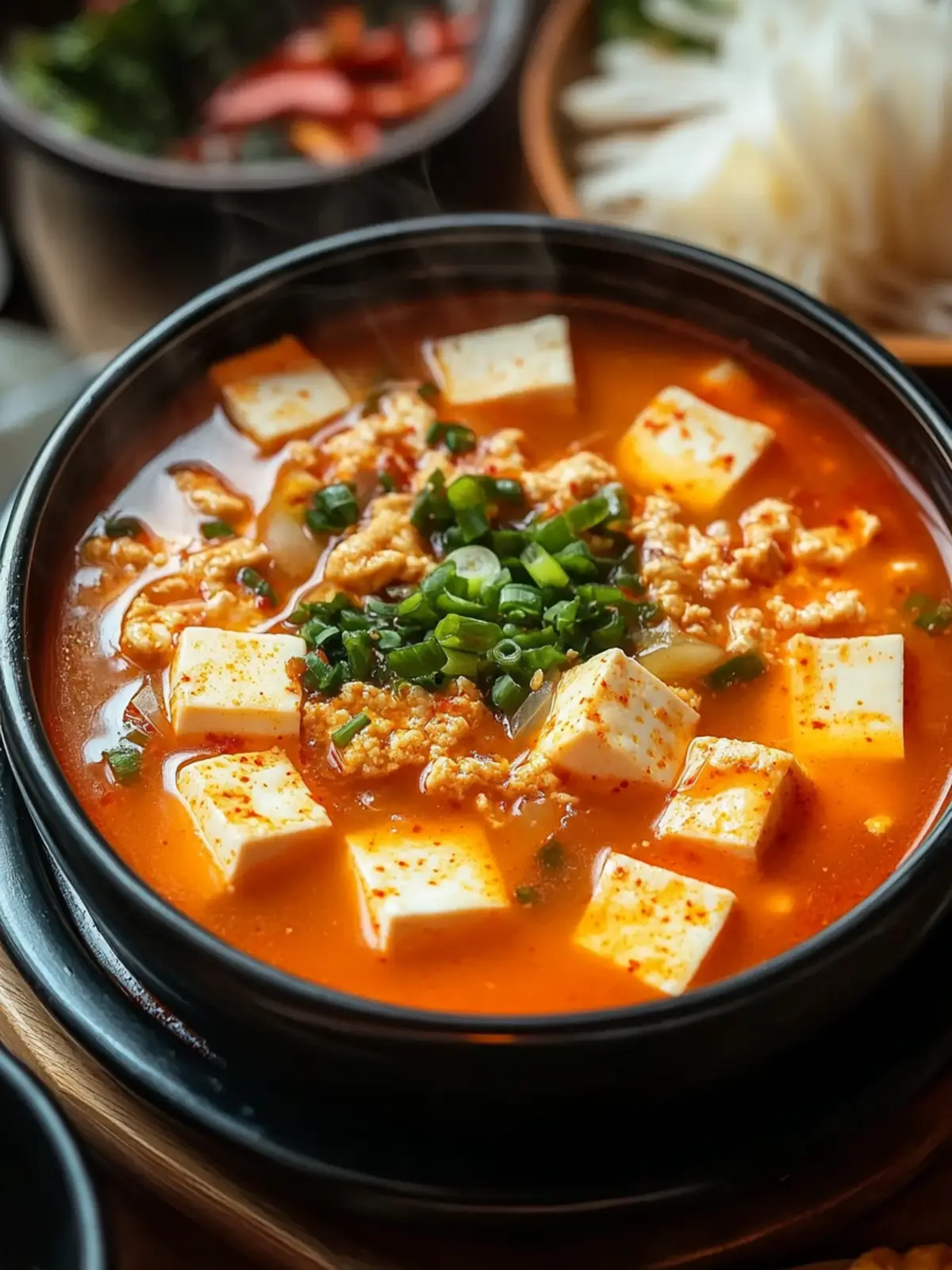
Sundubu Jjigae: Cozy Soft Tofu Stew for Comforting Nights
Ingredients
Equipment
Method
- Prepare the seafood: Clean the clams thoroughly or devein the shrimp carefully.
- Sauté the onion: Heat a pan over medium heat and add a splash of oil. Sauté until translucent.
- Cook the seafood: Add seafood to the pan and cook until done, about 3-4 minutes.
- Add the tofu: Gently add soft tofu, being cautious not to break it apart.
- Mix in the gochugaru: Sprinkle gochugaru over the stew and stir gently.
- Incorporate the egg: Beat the egg and pour it slowly into the pan, stirring until set.